

Residential Parks and Life Stages: What Kind of Apartment Suits You Right Now, and What Will Still Work in a Few Years?
Choosing a new home is a complex, strategic decision that shapes your daily quality of life over the long term. Therefore, it is unwise to base your choice solely on your current life stage; instead, conscious and forward-thinking planning is required. It pays to think on a multi-year horizon and weigh how your personal and professional needs—along with your living circumstances—will evolve in the future.
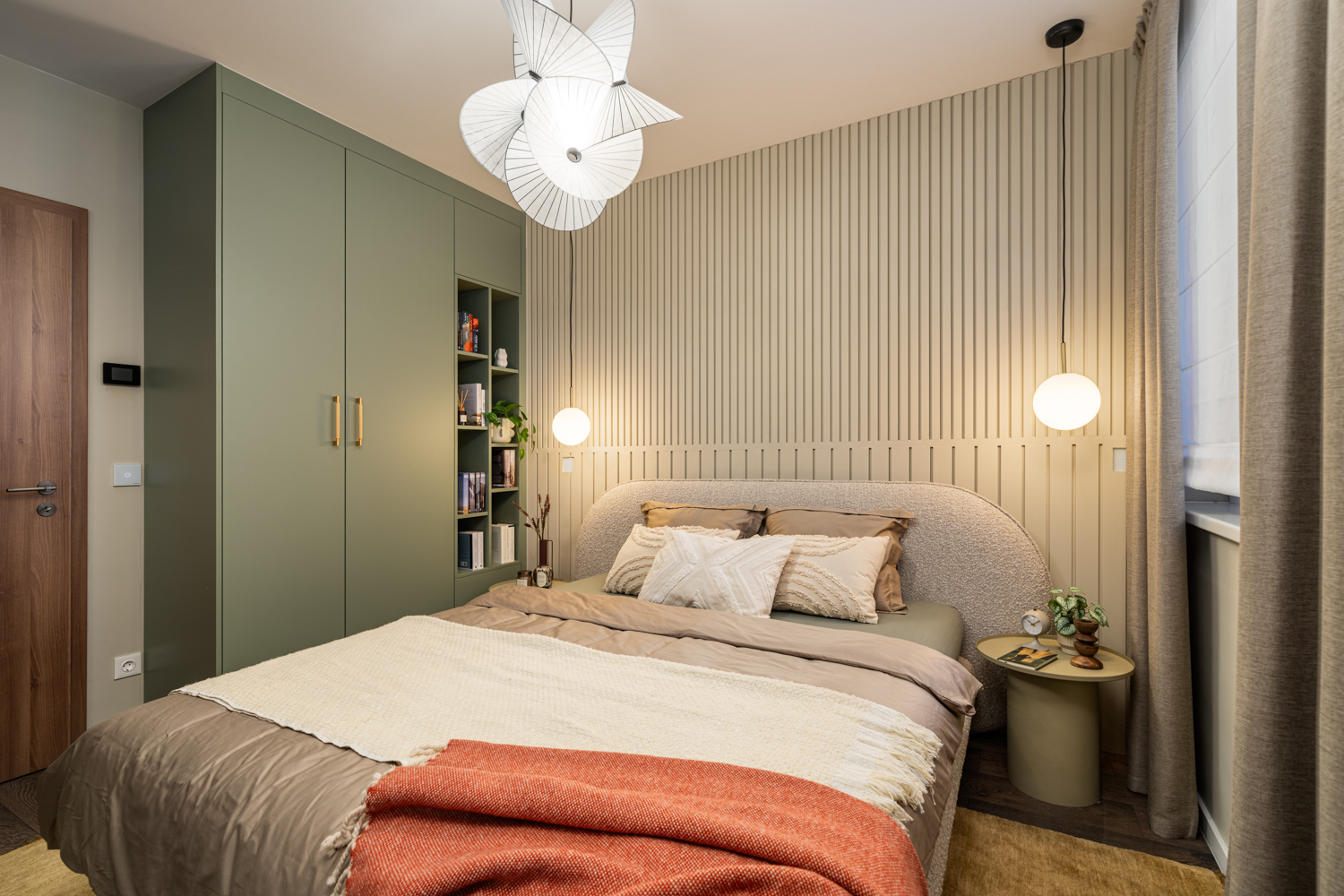
How Do We Choose an Apartment?
Providing a single, objective answer to this question is difficult, as the process of searching for a home and making a final decision involves numerous subjective criteria that hardly fit a "standardized" template. However, it is almost always true that choices are dictated by current market inventory, alongside existing living circumstances and financial capacity at that given moment.
At the same time, buying an apartment is an exercise in planning, and residential parks define the framework of our daily environment not just for the short term, but for years to come. When deciding, it is therefore far better to think long-term.
This does not necessarily mean making a drastic departure from what you would otherwise choose. However, the secret is always in the details. If you want an apartment to serve as an ideal home for many years, you should carefully consider your future plans—starting a family, career changes, moving, etc.—at least in broad strokes. Alongside comparing the specs of various residential complexes and apartments, try to sketch out your future needs rather than merely reflecting your immediate circumstances.
Why Is Deciding Based Solely on Your Current Life Stage Not Enough?
It is completely natural and logical to try to align a home purchase with your current circumstances, as existing life experiences offer the most solid foundation for decision-making. However, these life stages rarely remain static over extended periods, as countless planned or unexpected changes can occur in the coming years. A single person may become part of a couple, a couple may start a family, or an office job may quickly shift to hybrid or fully remote work.
Accordingly, residential parks and apartments that seem like the perfect choice today may feel cramped or impractical in just a few years.
Of course, no one can predict the future with absolute precision—nor is that expected of homebuyers, even those with the clearest vision. Life holds unpredictable variables, but a significant portion of them can be anticipated and weighed in advance. If you incorporate the most probable scenarios into your decision matrix at the time of purchase, the property will be able to serve your needs for a substantially longer period, minimizing the risk of forced moves or frustrating compromises. A well-chosen apartment in a residential complex not only supports your current lifestyle but also guarantees essential flexibility for future life stages.
What Factors Matter When Buying Your First Home?
Buying your first property is a major milestone in anyone's life, but it can also lead to somewhat narrow thinking during the selection process. A common mistake during a first purchase is concentrating all resources and efforts entirely on minimizing the purchase price. While this is understandable—since budgets are typically tighter at this stage than later in life—it is still worth evaluating the property's future potential.
Consider asking yourself a few fundamental questions:
- Will there be enough storage space?
- Can a dedicated work corner be set up later?
- Is there sufficient natural light?
- Does the apartment feature a balcony or terrace?
- Are everyday amenities and services easily accessible?
A valuable piece of advice: total square footage isn't everything. A smaller, more affordable apartment that is easily reconfigurable and flexible can often be a superior choice that meets your needs over a longer period. Modern residential parks offer plenty of opportunities in this regard.
Now let us look at the specific life stages that most frequently shape future plans.
How Do Needs Change After Moving In Together?
The evolution of standard life stages usually follows a familiar path, the first major step being the transition from living alone to moving in with a partner. However, many people shop for real estate while still single and view the features offered by residential parks through that lens. Because of long-term plans, it pays to leave some margin for growth, as the property will eventually need to accommodate the lifestyle and needs of two people instead of one.
Two people living parallel lives require significantly more storage capacity, a roomier closet, a more functional bathroom layout, and clearly separated living zones. If both partners work from home, a single dining table with two laptops is no longer sufficient. It is also worth considering how much an extra half-room or a larger living room enhances the long-term usability of the apartment. In many cases, a well-designed 1.5-bedroom or 2-bedroom apartment can serve owners years longer than a smaller alternative.
What Type of Apartment Suits Starting a Family?
Following relationship stability, the next defining step is starting a family—a milestone that often becomes relevant a few years after purchasing a home. In this life stage, the primary decision criteria revolves around whether the apartment can function as a complete, safe family home. It is worth evaluating whether a nursery can be arranged, whether there is sufficient storage for strollers, toys, or sports gear, and how secure the immediate residential environment is.
In addition to individual apartment layouts, residential parks themselves add tremendous value to the family experience. A major advantage of these developments is that they frequently feature green parks, playgrounds, enclosed community spaces, and safer, low-traffic environments. In many cases, nurseries, preschools, or elementary schools are located right in the immediate neighborhood. While these aspects might seem less critical to a single buyer or young couple initially, they can profoundly impact daily quality of life just a few years down the road.
What Should You Consider Regarding a Home Office?
One of the most defining workforce trends in recent years has been the widespread adoption of hybrid and fully remote work, which has fundamentally reshaped real estate expectations. Modern homes now function significantly as workspaces, a reality that must be supported by interior ergonomics and layout architecture. Consequently, completely new priorities have emerged when selecting an apartment.
Key considerations include ample natural light, a quiet environment, reliable high-speed internet connectivity, and the ability to physically separate work from relaxation space. Furthermore, the infrastructure offered by modern residential complexes—such as manicured green courtyards, community lounges, or dedicated co-working zones—provides ideal opportunities for mid-day breaks and mental recharge. Anyone who works from home regularly should view their prospective property as a multifunctional space that guarantees both premium living standards and a professional work environment.
When Is the Right Time to Move to a Larger Apartment?
Even if you are extremely conscious and forward-thinking during your home search, it is completely natural to eventually reach a point where your current life stage can no longer be accommodated within the same walls. Moving is sometimes a natural step in personal progression. However, it is important to distinguish between truly outgrowing a property and simply dealing with an impractical furniture layout.
Thanks to thoughtful spatial planning or professional interior design solutions, an apartment can often remain comfortable far longer than a larger home with a poor floor plan. If it becomes clear that a larger home will definitely be necessary within a few years, factor the property's future resale value into your current purchase. A sought-after location, energy-efficient engineering, and a highly functional floor plan will always give you an edge when it comes time to sell or move.
Summary
When purchasing an apartment in a residential park, focusing solely on immediate needs is not enough; factoring in anticipated life changes over the next 3 to 5 years is essential to making a sound decision. A strategically planned, forward-looking choice prevents premature or forced moves, significantly enhances daily comfort, and guarantees a more value-retentive investment over the long haul. By integrating future milestones alongside current preferences into your decision-making process, you can find a home that seamlessly evolves right along with you.
FAQ
Why should I plan several years ahead when buying an apartment?
Because your life stage can change rapidly: moving in with a partner, having children, or transitioning to a home office setup can create entirely new living requirements within just a few years.
Is it always best to choose the smallest property as a first home?
Not necessarily. Quite often, a slightly larger or more adaptable apartment serves its owner much longer, making it a more cost-effective decision overall.
What advantages can a residential park offer before starting a family?
Green surroundings, secure inner courtyards, playgrounds, and well-established local services become exceptionally valuable once family life begins.
What should I look for if I work from home (home office)?
A clearly separable workspace, good natural lighting, a quiet environment, and a layout that allows for comfortable, long-term remote work are all critical factors.
When is the right time to move to a larger apartment?
When your existing apartment can no longer sustainably support your daily living needs. However, it is always worth exploring first whether a better spatial arrangement or interior design tweak can extend the livability of your current home.